REVIEW · HARARE
Harare City Tour & Zimbabwe Highlights
Book on Viator →Operated by Wenhau Africa Safaris & Tours · Bookable on Viator
Harare tells its story street by street. This one-day Harare City Tour is built around real context: you start at Africa Unity Square for an orientation on Zimbabwe’s past and present, then you roll past government landmarks and into Mbare, one of the city’s most important everyday-life neighborhoods. I like that the guide doesn’t just name places, they explain how the country’s history is layered into what you see on the streets.
My main watch-out is cost creep. The tour price includes water, parking, and transport, but you’ll likely pay some park entrance fees directly for sites like Balancing Rocks, and lunch isn’t included—so your final day budget may be higher than the headline $128.
In This Review
- Key Things That Make This Tour Worth Your Time
- Price and Logistics: What You Get for $128
- Africa Unity Square: The Quick Start That Helps You Read the City
- Harare CBD to Mbare: Big Landmarks by Road, Real Life on the Ground
- Balancing Rocks at Chiremba/Epworth: Money Rock and Flying Boat Shapes
- Domboshawa Hill After Lunch: Bushman Cave Paintings and Ask-Any-Question Time
- How to Plan Your Day So You Don’t Feel Rushed
- Service Quality: Friendly Briefings, But Watch for Day-of Changes
- Is This Harare Highlights Tour Good Value?
- Should You Book This Harare City Tour?
- FAQ
- Where does the tour start?
- Is pickup included?
- How long is the tour?
- What is included in the tour price?
- Are there any costs not included?
- How many people are in the group?
- What’s the cancellation policy?
Key Things That Make This Tour Worth Your Time

- Africa Unity Square orientation: you get a structured look at Zimbabwe (and Harare) across pre-colonial, colonial, and post-colonial phases
- A focused look at governance: the 3 arms of the state—judiciary, legislative, and executive—are part of the city story you’ll see
- Mbare as a daily-life snapshot: you’ll connect Harare with the rest of the country through the big bus terminus and major fresh produce market
- Balancing Rocks formations: money rock, flying boat shapes, and a viewpoint over parts of the city
- Domboshawa Hill’s cultural stops: bushman cave paintings plus an interpretative center where you can ask questions
- Small group feel: capped at 15 travelers with hotel lobby pickup and an air-conditioned vehicle
Price and Logistics: What You Get for $128
At $128 per person for about a day, this tour is aimed at first-time Harare visitors who want a tight plan and guided context. You get hotel pickup (meet and greet at the lobby), a mobile ticket, bottled water, and air-conditioned transport plus parking fees. With a maximum group size of 15, it usually feels more manageable than the big coach style.
What you should plan for up front: lunch is not included, and you’ll also pay park entrance fees directly to the supplier for certain stops. Even the Balancing Rocks segment specifically notes that admission is not included, and that’s the most likely place where you’ll feel the “extra cost” moment. If you’re trying to keep spending predictable, budget a little buffer for on-site fees and bring cash if you can—at minimum, be ready for payment requests on the day.
The tour is also weather-dependent. That matters because you’re moving between viewpoints and hills, and the day’s flow can change if weather forces a rethink. If you’re the type who hates last-minute changes, I’d treat this as a flexible day and keep expectations on the practical side.
You can also read our reviews of more city tours in Harare
Africa Unity Square: The Quick Start That Helps You Read the City
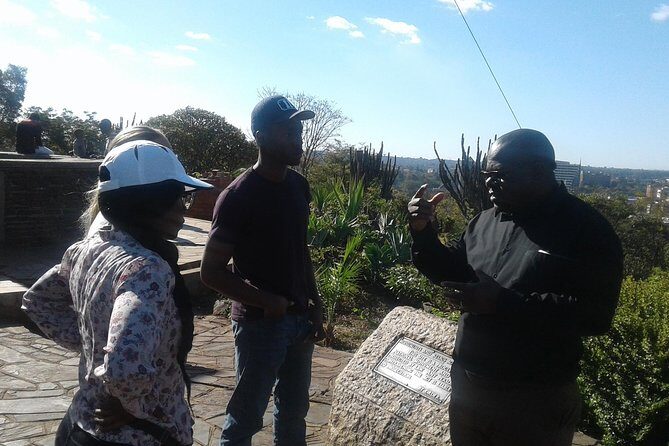
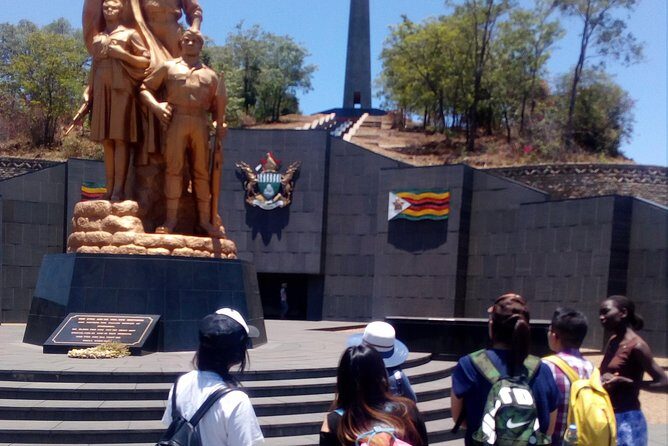
The tour begins in Harare with a proper meet and greet, then you head straight to Africa Unity Square (formerly Cecil Square). This is more than a photo stop. The key value here is orientation: you’ll get a detailed explanation of Zimbabwe and Harare as the capital city, plus a history lesson organized in three phases—pre-colonial, colonial, and post-colonial.
I especially like that the guide ties politics to place. You’ll learn about the 3 arms of the state—judiciary, legislative, and executive—and you’ll see how that shows up in the surrounding landmark environment, including what’s described as the oldest hotel in the city nearby. It helps you look at the skyline and think, okay, these buildings aren’t random. They’re part of how the country is structured and how power is organized.
The square area also works as a gateway to cultural understanding. Zimbabwe has diverse cultures and religious life, and your guide covers that directly, including a look at places of worship in and around the city. You’ll spend about 2 hours here, and that’s a good length of time if you want to leave the tour with more than just names.
Harare CBD to Mbare: Big Landmarks by Road, Real Life on the Ground

After your orientation, you shift from learning to seeing. From Harare CBD, you drive past major state and financial buildings—parliament, judiciary, executive, and the central bank—and then you proceed through the Kopje area. The value of this driving segment is time efficiency: you get a lot of Harare’s most important architecture and institutional locations without hiking between them.
Then comes the contrast: you head to Mbare, described as the hive of the city and the oldest township in Harare, also one of the oldest in the country. This stop is one of the best reasons to book this style of tour, because it helps you understand daily living rather than only viewing monuments. You’ll get insight into how people live, and you’ll see the neighborhood’s role in connecting Harare to the rest of the country.
Two practical details make Mbare especially useful for visitors: it’s home to the biggest bus terminus in the country and also to the biggest local fresh produce market. That means you’re not just looking at buildings—you’re seeing movement and food supply, which are basic engines of city life. If you want to understand Harare as a functioning place (not a sightseeing set), this is the moment where the tour earns its keep.
From a drawback perspective, Mbare can feel intense if you’re tired or easily overwhelmed in crowds or busy market spaces. Go in with a calm mindset, keep your phone secured, and remember you’re there to observe how the neighborhood works, not to “consume” it like a theme park.
Balancing Rocks at Chiremba/Epworth: Money Rock and Flying Boat Shapes
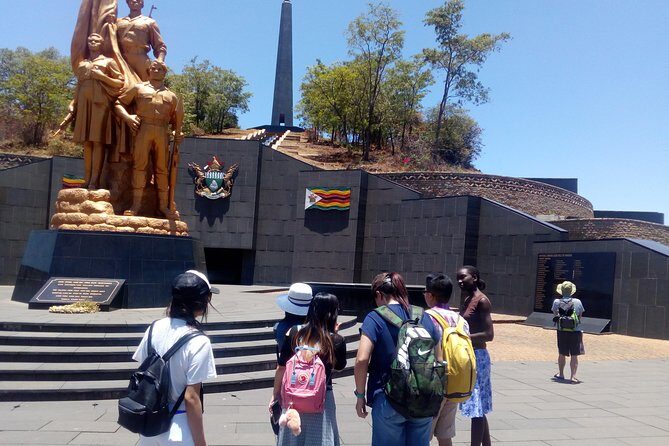
Next you head toward Chiremba/Epworth Balancing rocks, where you’ll see some of the most famous balancing rock formations in the country. This is a shorter segment—about 1 hour—which is the right length for viewpoints and quick exploration without turning the day into a full outdoor trek.
The stop is built around specific named formations, including money rock and flying boat shapes. Those kinds of distinctive features matter because they give your brain a hook. You can look at a formation, connect it to the name, and remember it later—especially if you take a couple of photos as proof-of-where-you-were.
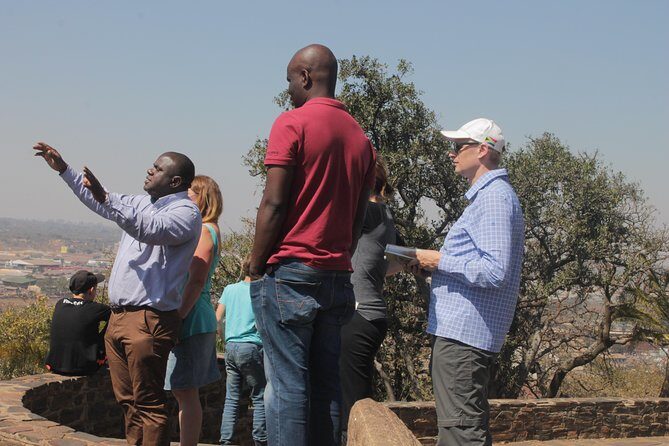
You’ll also get a view of parts of Harare from a viewpoint. Even if the skyline isn’t the main attraction, the high angle helps you understand how Harare spreads out and where neighborhoods sit relative to one another.
Cost note: admission is not included here. So if you’re keeping a strict budget, make space for at least this likely entrance fee. Also remember it’s an outdoor stop, so weather matters again. If conditions are cloudy or rainy, the “rock views” may be less photogenic, but the formations themselves should still be visible.
Domboshawa Hill After Lunch: Bushman Cave Paintings and Ask-Any-Question Time
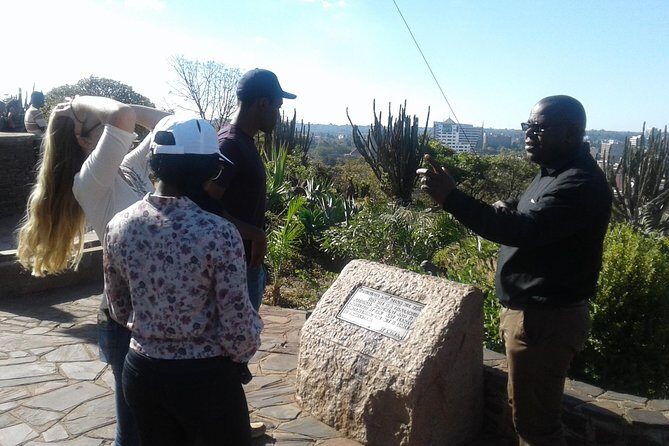
After lunch (not included), you travel in a northeastern direction to Domboshawa Hill. This is another cultural stop, and it’s where the day starts to feel more like “story” than “sightseeing.”
One of the highlights is the bushman cave and its paintings. You’ll also see yet another balancing rock at the site. Having two different types of “nature-with-meaning” elements in one place—geology plus human artwork—creates a strong contrast that’s hard to recreate on a typical urban tour.
You’ll also visit an interpretative center, where the guide provides context. I like interpretative centers because they give you a framework. Without that, cave art can feel like random markings. With it, you start asking better questions and you look more carefully.
The tone here is interactive. As you move up and down the hill, your guide will encourage discussion and you’ll have time to ask questions. That Q&A piece is valuable because it turns the tour from a lecture into a conversation. It’s also one reason this stop can feel more satisfying even if you only spend about 2 hours total.
Good to know: this stop notes admission ticket free. So if you want a “nice, included” component after paying fees earlier in the day, Domboshawa is your best bet.


How to Plan Your Day So You Don’t Feel Rushed
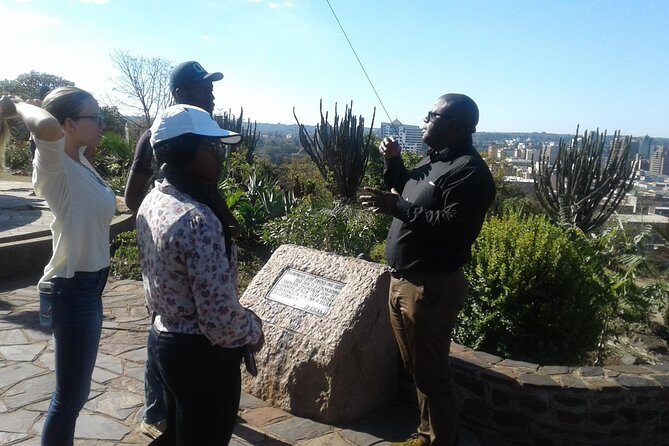
This is a full-day layout with travel time, a city orientation segment, a busy neighborhood stop, a scenic rock visit, and then a hill-and-cave cultural site after lunch. That means your comfort during transitions matters more than you might think.
First, plan your lunch strategy. Because lunch isn’t included, you’ll want to have an idea of whether you’ll purchase food on the day or grab something before you meet the group. Eating too late or not planning for it can make the Domboshawa portion feel more tiring than it needs to be.
Second, dress for hills and uneven ground. Domboshawa is a hill stop, and balancing rock areas can involve walking on paths or viewing platforms. Comfortable shoes matter. Bring something for sun protection too, since outdoor viewpoints are part of the schedule.
Third, keep expectations aligned with the tour style. This tour mixes big-picture explanation at Africa Unity Square with real-world Harare at Mbare, then adds nature/scenery at Balancing Rocks and Domboshawa. If you go in knowing you’re not getting long museum-style time at each location, you’ll feel much happier with the pacing.
Finally, since weather can affect what happens, keep a flexible mindset. A day that includes outdoor viewpoints and hills is always at the mercy of rain clouds.
Service Quality: Friendly Briefings, But Watch for Day-of Changes
The operator, Wenhau Africa Safaris & Tours, clearly aims to run this as a guided, explanation-heavy experience, not just a drive-and-drop arrangement. I like that the tour has a pre-tour briefing style, because it helps you follow along—especially when the morning orientation includes political structure and history in phases.
There’s also a positive pattern in the tone of the guides: people note being personable and giving relevant cultural and historical insight throughout the day. That kind of guide can make the difference between seeing buildings and actually understanding what you’re looking at.
Now for the honesty part. There has been at least one serious issue reported: a guide didn’t show on a scheduled day/time due to a technical challenge with booking emails. While that’s not what you want to hear, it does show that the company can recognize the problem and offer resolution steps. Still, it’s smart to double-check your confirmation details and keep track of your booking confirmation before departure.
There’s also the reality of security interventions and access restrictions. If certain areas are temporarily off-limits, the route and what you can see may change at short notice, and additional costs can show up. If that possibility would stress you out, you can reduce risk by traveling with a bit of buffer money and keeping your schedule expectations flexible.
Is This Harare Highlights Tour Good Value?
For many visitors, the biggest question is whether the tour is worth $128 once you add what’s not included. On the plus side, you do get air-conditioned transport, parking, bottled water, and hotel pickup—and several core stops are free of ticket cost. The structure is also well thought out for first-timers: you start with orientation, then you see landmarks, then you visit everyday-life Harare, and finally you finish with nature and culture.
On the minus side, you should assume you’ll pay on-site entrance fees for places like Balancing Rocks and you’ll still need to handle lunch on your own. If you were hoping everything would be fully included, the day can end up feeling expensive. That doesn’t automatically mean it’s overpriced—it just means you should budget realistically for extras.
So who gets the best value? I’d say:
- You’re short on time and want a guided overview of Harare in one day
- You care about context—history, governance, and culture—not only “what to photograph”
- You’re comfortable with some day-of variability and paying site fees directly
If you’re the type who wants a perfectly fixed itinerary with zero surprise costs, you may find this less satisfying.
Should You Book This Harare City Tour?
If you want Harare with explanations, good pacing, and a mix of city institutions plus real neighborhood life, this is a strong choice. The Africa Unity Square start is the kind of grounding that makes everything else make more sense, and the stop in Mbare gives you the daily Harare perspective you won’t get from a purely monument-based day.
I’d only hesitate if you have a tight budget that can’t stretch for park entrance fees and lunch, or if you need strict, no-change scheduling. For most visitors, though, the balance of guided context and well-chosen stops is exactly what you want when you have one day to see the city.
FAQ
Where does the tour start?
The tour starts in Harare, Zimbabwe, with a meet and greet at your hotel lobby.
Is pickup included?
Yes. Pickup is offered, and the meeting is at the hotel lobby.
How long is the tour?
It’s listed as about 1 day.
What is included in the tour price?
The tour includes bottled water, an air-conditioned vehicle, and parking fees, with free admission noted for some stops.
Are there any costs not included?
Yes. Park entrance fees are not included and are paid directly to the supplier. Lunch is also not included. Balancing Rocks admission is listed as not included.
How many people are in the group?
The tour has a maximum of 15 travelers.
What’s the cancellation policy?
Free cancellation is available up to 24 hours in advance for a full refund, and the tour is also dependent on good weather. If canceled due to poor weather, you’ll be offered another date or a full refund.