REVIEW · ZIMBABWE
Matobo Rhino Encounter
Book on Viator →Operated by Bushmen Travel Company · Bookable on Viator
Rhinos and rock art in one afternoon. This Matobo National Park experience pairs a close-up white rhino tracking walk with practical lessons on footprints, medicinal plants, and ancient cave paintings, then finishes with a BBQ lunch and sunset snacks. It’s a full afternoon that feels both wild and oddly educational in the best way.
I love the small-group setup, capped at 8 participants, which keeps things calm and lets you actually hear the guide. I also like that the price covers more than just the animal time: hotel transfers, bottled water and refreshments, lunch, and digital photos are included.
One possible drawback: it’s still a walking wildlife outing. If you’re not into dusty, uneven ground, you’ll want to prepare with closed-toe shoes and bug spray before you arrive.
In This Review
- Key things that make this Matobo rhino encounter special
- Matobo’s white rhino tracking: what you’ll be doing
- How the wind changes your rhino experience
- Bush skills you can use: plants, footprints, and dung
- Meet the rangers and learn the “why” behind protection
- The rock paintings cave: why it belongs in the same day
- BBQ lunch and sunset sun downers: the schedule rhythm that helps
- Guides, photos, and the small touches that improve value
- Price and logistics: does $120 feel fair?
- What to bring so you enjoy the walk, not just survive it
- Who should book this, and who might not love it
- Should you book the Matobo Rhino Encounter?
- FAQ
- FAQ
- What is the duration of the Matobo Rhino Encounter?
- What time does the tour start?
- How many people are on the tour?
- Is pickup offered?
- What is included in the price?
- What should I bring?
- Is there a cancellation option if plans change?
- Will I receive confirmation after booking?
Key things that make this Matobo rhino encounter special
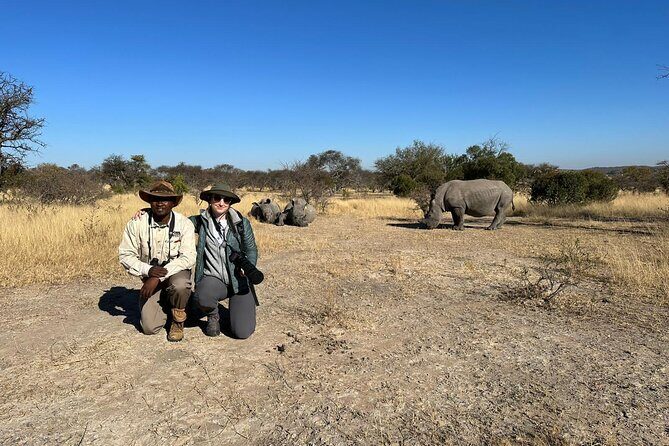
- Max 8 people means less crowding and more time with the rangers
- White rhino tracking with a focus on wind direction and calm movement
- Hands-on bush knowledge: medicinal plants, footprints, and dung clues
- Cave paintings visit with thousands-year-old rock art
- BBQ lunch + sunset sun downers so you don’t end the day on an empty stomach
- Named guiding support: Blessing and Bongani are specifically called out for friendly, efficient organization
Matobo’s white rhino tracking: what you’ll be doing
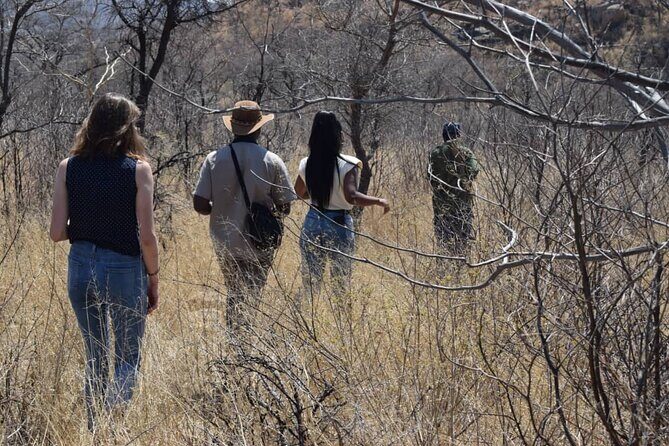
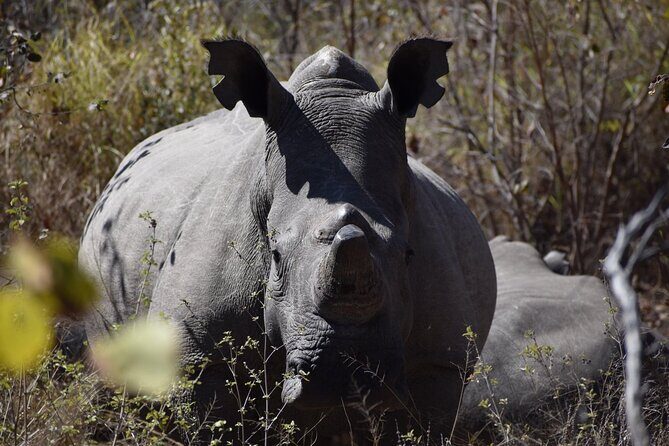
The core of this experience is a small-group tracking walk in Matobo National Park, built around seeing white rhinos in their natural habitat while learning how to read the land. The idea is simple: you don’t just look for animals—you learn how park rangers and local guides interpret signs long before the rhinos appear.
The walk is guided, and it’s paced to let you stop, observe, and ask questions. You’ll also get context for how earlier humans survived in this kind of tough savannah environment—through skills like tracking and using natural remedies. If you enjoy wildlife time that goes beyond spotting something impressive and then rushing on, this will feel satisfying.
That six-hour window (about 5 hours, depending on the day) matters. It’s long enough to experience the rhythm of tracking—sometimes fast, sometimes slow—without feeling like a quick drive-by. Just know you’re signing up for movement in the bush, not a sit-and-watch safari.
You can also read our reviews of more tours and experiences in Zimbabwe.


How the wind changes your rhino experience
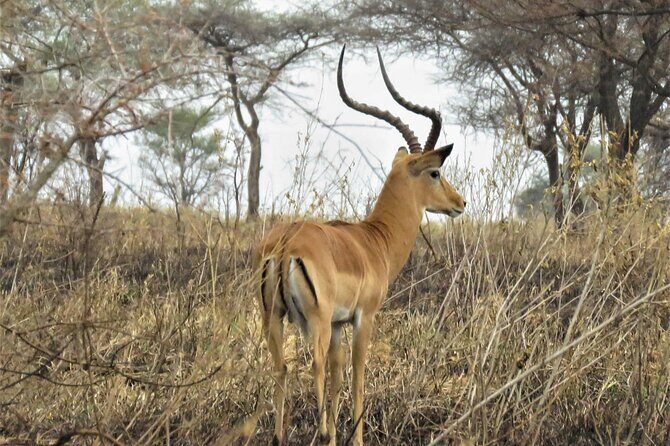
White rhinos are not hard to admire from a distance. The challenge comes when you’re trying to get close while keeping the animals calm. That’s why the guide pays attention to wind direction and your approach.
In plain terms: if the wind is wrong, rhinos notice you sooner and the whole moment can get cut short. If the wind is right, you’re more likely to get that classic “we’re really here” feeling—standing near rhinos while the rangers guide your distance and movement.
This is where the experience becomes more than a photo mission. You’ll learn to think like a tracker: watch behavior, read space, and treat the rhinos like living, reacting animals—not targets. It’s also one reason the guide’s method matters; when done well, it turns a wildlife viewing into a more respectful, higher-success sighting.
Bush skills you can use: plants, footprints, and dung
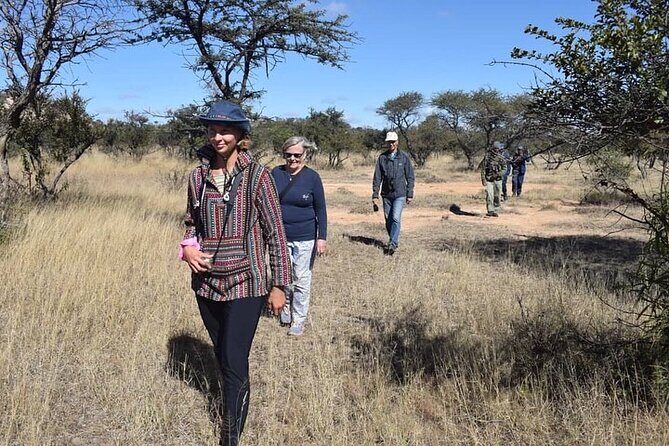
One of the most practical parts of this day is the lesson style. You’re not sitting through a lecture. You’re walking and learning how to spot clues: footprints, animal dung, and plants used for medicinal purposes.
I like this approach because it changes how you experience the park even when the rhinos are quiet. You start looking at the ground, the trails, and the vegetation rather than only scanning for movement. That means the learning is happening all afternoon, not just in the moments when an animal is visible.
The tour also frames bush knowledge through the survival lens of early ancestors. You’ll hear about natural remedies, including traditional know-how for snake bites. That detail isn’t there to scare you—it’s there to show how knowledge of the land could mean life or death in a harsher past.
A quick reality check: you won’t walk out with a full field manual. But you’ll gain real awareness of what rangers and local guides notice. And that makes the park feel like a place with patterns and meaning, not just scenery.
Meet the rangers and learn the “why” behind protection
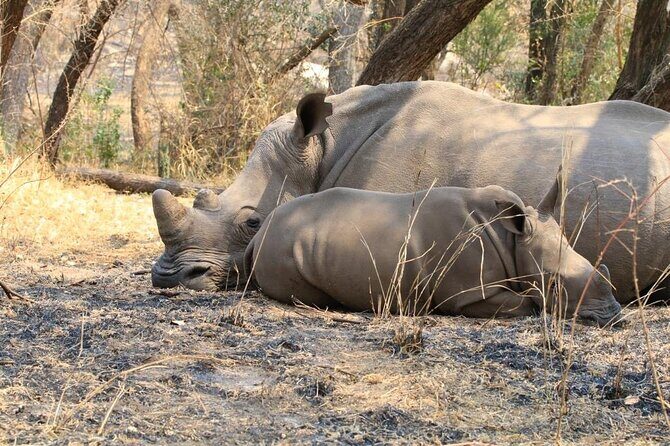
A big part of the day is being around the park rangers, who dedicate their time to protecting endangered animals. You don’t just hear that in a generic way; the structure of the walk gives it weight.
When rangers are part of the experience, you get two benefits. First, your chances of good sightings usually improve because the team understands how wildlife behaves in different conditions. Second, you start to see protection as active work—monitoring, guiding human movement responsibly, and staying alert in real time.
You’ll also hear how the guides interpret the rhino’s natural habitat, so your sightings connect to what the animal needs to survive. That’s what turns “I saw a rhino” into “I understand a little more about how rhinos live.”
If you’re the type of person who asks questions like why animals choose certain areas, this part will land well. And if you don’t, you’ll still feel like you’re with a team that knows what it’s doing.
The rock paintings cave: why it belongs in the same day
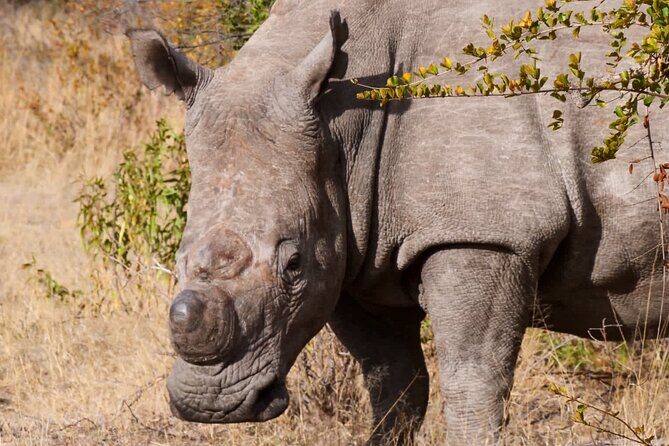
After the rhino tracking and bush learning, you’ll explore a cave with thousands-year-old cave paintings. Matobo is famous for rock art, and this stop adds a very different kind of connection to the place.
This is a good pairing because it keeps the experience from being one-note. You move from animal behavior and tracking clues to human history—how people once used these rock spaces to express beliefs, record life, and leave marks that survive long after the original artists.
The cave time is also a nice break from the open-air walking. It gives your body a chance to reset, and it gives your mind something to hold onto besides just the wildlife.
One practical note: caves can feel cooler and dimmer than the outdoors. Light conditions inside can affect photos, so treat your phone camera like it’s working in shade. A steady hand helps.


BBQ lunch and sunset sun downers: the schedule rhythm that helps
You’re not left to solve the meal problem on your own. A barbecue lunch is included, along with bottled water and refreshments. That matters in Matobo because you’re active for hours. Hunger and fatigue can quietly steal the best parts of a wildlife day.
What I like about the way this day is set up is the natural rhythm. You start in the afternoon (start time is 1:00 pm), then you spend the middle part of the day doing the tracking and learning. Lunch breaks things up, so you’re not pushing through your best mental focus while tired.
Then the tour ends with sunset—sun downers and snacks included. That changes the whole feeling of the day. Instead of rushing out right after the last rhino sighting, you get a wind-down moment that lets the park settle. If you’re chasing great photos, sunset is also when the light gets softer, which can make both scenery and casual shots look better.
Guides, photos, and the small touches that improve value
The experience is run by Bushmen Travel Company, and local guiding support is a big part of why people come away happy. In the feedback you’ve been provided, guides including Blessing and Bongani are specifically credited for being friendly and efficient.
That matters because in a tracking experience, guide quality is everything. They’re not only spotting animals; they’re also managing your position, your pace, and the story you take from the day.
You also get digital photos included. It’s one of those “nice, not necessary” extras that becomes very necessary once you realize wildlife sightings happen fast. Having a few photos added to your collection can save you from the disappointment of blurry attempts.
And there are straightforward comfort inclusions: hotel transfers, bottled water, refreshments, and lunch. For a $120 price point, this is where the value comes from. You’re not paying extra to stay hydrated or to eat well after walking for hours.
Price and logistics: does $120 feel fair?
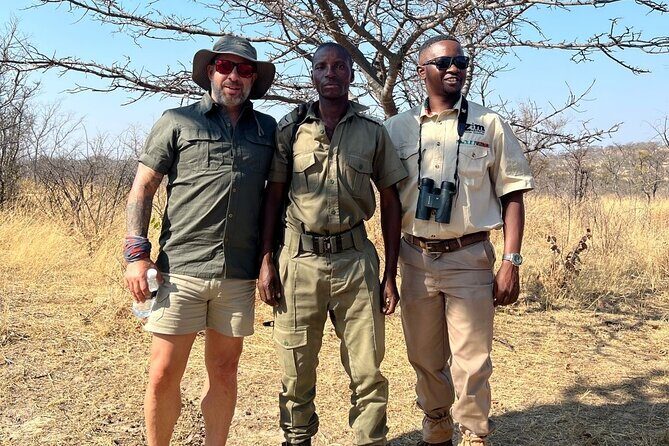
At $120 per person for a ~5–6 hour activity, the key question is what’s included. Here, a lot is baked into the fee: hotel transfers, bottled water and refreshments, BBQ lunch, and digital photos. Group discounts are also offered, which can make the per-person cost drop if you’re traveling with others.
That added value is practical. If you had to pay separately for transport, meals, and “guided learning time,” the total would usually creep up quickly. This format keeps you in one package: you show up ready, and the day’s essentials are handled.
Timing is another logistics factor. The tour starts at 1:00 pm, and the day is built for an afternoon-to-sunset flow. One recent account noted the drive to Matobo National Park takes about 30 minutes, which keeps the day from feeling dominated by travel time.
If you’re planning around logistics, it also helps that pickup is offered and the meeting area is near public transportation. That can give you options if you’re not staying at a hotel with easy shuttle access.
What to bring so you enjoy the walk, not just survive it
This experience is best when you’re comfortable on your feet. Bring comfortable closed-toe shoes, khakis (or similar practical pants), a sun hat, sunscreen, and bug spray. The outfit checklist isn’t style advice—it’s survival advice for bright sun, dust, and insects.
Closed-toe shoes matter because bush paths can include grit and uneven ground. Sun hat and sunscreen matter because you’ll be outdoors for hours in afternoon light. Bug spray matters because the bush can be buggy, especially near vegetation.
Also, keep your expectations realistic for photos. Wildlife tracking is not a guarantee of a perfect, calm, stationary pose. Your best shots come when you’re ready and positioned well, not when you’re frantically re-framing at the last second.
If you like to capture details, consider bringing a small camera strap or using a secure phone grip. When the action happens, you’ll be glad your gear isn’t clumsy.
Who should book this, and who might not love it
This is a great fit if you want a wildlife day with learning built in. You’ll enjoy it most if you like hands-on nature interpretation—tracking signs, learning what medicinal plants are used for, and understanding why rangers protect these animals.
It also suits you if you want a smaller-group feel. With a maximum of 8 participants, you should get more attention and less crowd noise while you’re trying to watch or listen.
You might not love it if you want a purely low-effort safari where your main job is sitting and spotting from a vehicle. This is a walking experience, and even if it’s guided, it still involves being on your feet.
Good news: the activity notes say most people can participate, so it isn’t presented as extreme. Still, if your mobility is limited, consider the walking part carefully before you commit.
Should you book the Matobo Rhino Encounter?
If your ideal Matobo day includes close-up white rhino tracking plus real bush lessons and a cave paintings stop, I think this is worth your time. The small group size, included meal, and practical inclusions like water, transfers, and digital photos turn it into a smoother experience than piecing together separate parts yourself.
I’d book it if you’re curious about tracking skills—footprints, dung clues, and medicinal plants—or if you want your rhino time to come with context, not just distance and noise. It’s also a nice option for first-timers who want to feel like they understand the park a little better by the end of the afternoon.
I’d reconsider if you don’t want to walk, or if bugs and dust are a deal-breaker for you. If you’re prepared with the right shoes and spray, though, you’ll likely find it’s one of the better ways to experience Matobo beyond simple sightseeing.
FAQ
FAQ
What is the duration of the Matobo Rhino Encounter?
It runs for about 5 hours (approximately).
What time does the tour start?
The start time is 1:00 pm.
How many people are on the tour?
The tour has a maximum of 8 participants.
Is pickup offered?
Yes, hotel transfers and pickup are offered.
What is included in the price?
The experience includes hotel transfers, bottled water and refreshments, lunch (barbecue), and digital photos.
What should I bring?
Bring comfortable closed-toe shoes, khakis, a sun hat, sunscreen, and bug spray.
Is there a cancellation option if plans change?
Yes. You can cancel for free up to 24 hours in advance for a full refund.
Will I receive confirmation after booking?
Confirmation is received at the time of booking. The tour also uses a mobile ticket.